Dracula’s self-transformation
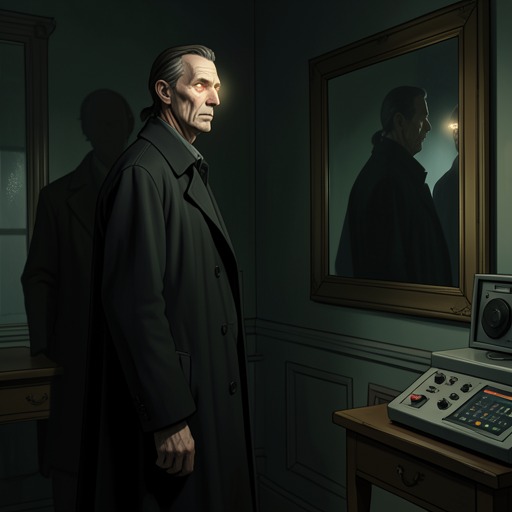
A History of the Vampire in Popular CultureDracula’s self-transformation is the decisive invention that separates Francis Ford Coppola’s adaptation of Bram Stoker’s Dracula from the novel’s account of vampiric origins. In this version, Count Dracula does not become a vampire because an older vampire bites or converts him. He turns himself through the force of grief and rage after the death of his wife, Elisabeta, making vampirism an act of will: a refusal of religious judgment, an attempt to defy death, and a punishment that reshapes his entire existence.
Departure from Bram Stoker’s Story
Coppola’s interpretation is not a faithful rendering of Bram Stoker’s original story, despite the implication of its title. Elisabeta is an entirely new character created by Coppola and screenwriter James V. Hart, and her presence supplies the emotional cause for Dracula’s transformation. The adaptation therefore replaces the conventional genealogy of the vampire with a personal catastrophe. Rather than being bitten and turned by an older vampire, Dracula becomes the source of his own damnation.
This change also alters the narrative’s governing conflict. The vampire is not simply a supernatural invader whose evil arrives from elsewhere; he is a bereaved man who converts his grief into rebellion. The transformation joins love, death, religion, and violence in a single origin event. Dracula’s monstrosity is thus presented both as a chosen transgression and as the consequence of refusing to accept the limits imposed by mortality and the Church.
Grief, Rage, and Religious Rejection
Elisabeta’s death is the immediate crisis behind the transformation. The Church rejects her because her death is treated as suicide, and Dracula responds by denouncing the institution that has refused to grant her the consolation or status he believes she deserves. His grief is inseparable from rage: the loss of his wife becomes an accusation against religious authority, while the Church’s judgment becomes the pressure that drives him toward supernatural defiance.
The action resembles a metamorphosis plot built around refusal rather than initiation. Dracula does not passively receive a curse; he embraces a new state in opposition to the moral order that has condemned Elisabeta. The act carries the shape of a tragic reversal: the force intended to preserve love beyond death instead produces a being cut off from ordinary human life. His attempt to resist loss creates the very condition that makes loss permanent.
The Transformation’s Consequences
Once Dracula has transformed himself, his continued existence is organized around the absence of Elisabeta. The adaptation makes his vampirism an enduring expression of grief rather than merely a predatory identity. His later pursuit of Mina is consequently tied to the origin of his condition. Elisabeta remains the absent figure around whom Dracula’s life turns, and the transformation gives that absence a supernatural duration.
The adaptation also makes Dracula responsible for his own damnation in a way that a conventional infection or inherited curse would not. The source of the condition is neither accidental contagion nor the intervention of a superior vampire. It is the Count’s response to bereavement and religious rejection. That choice does not make his later violence harmless, but it gives the narrative a tragic structure in which the monster’s suffering and his cruelty arise from the same origin.
Connection to Mina Murray
Elisabeta continues to shape the plot after Dracula’s transformation because she becomes the thread drawing Dracula and Mina Murray together. The film never explicitly states that Mina is Elisabeta reincarnated, but it clearly implies that Mina is either Elisabeta returned or a woman who carries something of her spirit and memories. Dracula’s self-transformation therefore establishes the emotional logic of his later attachment: Mina is not merely a new object of desire but a possible return of the woman whose loss created the vampire.
This connection makes the transformation a delayed revelation about the relationship between Dracula and Mina. Their encounter appears at first to be a meeting between predator and victim, yet the adaptation recasts it as a reunion shaped by memory, substitution, and unfinished mourning. The vampire’s origin and his final emotional destination are joined through Elisabeta’s continuing presence in Mina.
Release Through Mina’s Act
The consequences of Dracula’s self-transformation reach their conclusion when Mina finally kills him. In the adaptation, she does not simply destroy a supernatural enemy; she saves Dracula by giving his spirit the release it has long been denied. The act takes place in a chapel that appears to be the same place where Elisabeta’s body was laid after it was recovered from the Danube, returning the story to the religious and emotional scene that produced his transformation.
As Dracula finds the peace that has eluded him, the painting on the chapel ceiling shows the pair reunited. The ending consequently reverses the logic of his self-made immortality. Dracula’s attempt to keep love alive through vampiric existence has prolonged suffering rather than overcome death. Mina’s killing of him completes the release that his transformation prevented, suggesting that love survives not through endless undeath but through the acceptance of an ending.
The action also destabilizes the adaptation’s moral categories. The story presents Dracula’s transformation as a rebellion against religious condemnation, but it also shows the violence and corruption produced by that rebellion. Its emotional framework treats true love as stronger than life or death, while its gothic spectacle repeatedly complicates the boundary between good and evil. Dracula’s self-transformation is therefore both an origin of villainy and the first movement in a tragedy of grief, devotion, and release.